Some links in this post are affiliate or referral links. If you buy through them, I may earn a commission at no extra cost to you. As an Amazon Associate I earn from qualifying purchases. This post is general information, not medical advice. Talk to your pediatrician before starting solids.
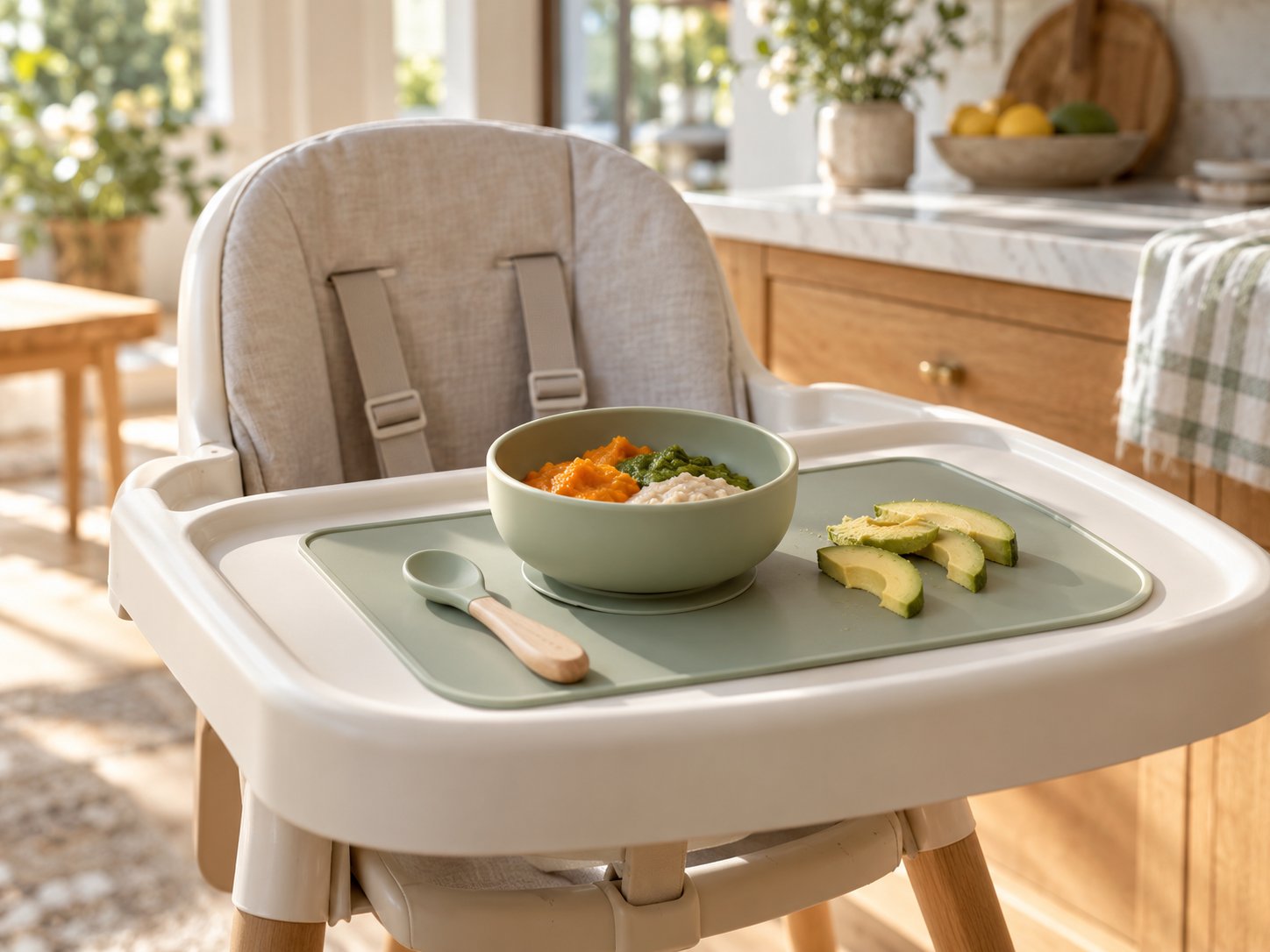
Starting solids is one of the most fun (and messiest) milestones of the first year. You don’t need a cabinet full of gadgets. A good high chair, a few first foods, and a plan for the mess will get you through. Here’s what we’d start with.
Our four starting solids essentials

The High Chair
Lalo The Chair 3-in-1
A modern, convertible high chair that grows with your child, in soft colors that look good in the kitchen.

First Snack
Amara Smoothie Melts
Freeze-dried yogurt melts made with fruits and veggies, no added sugar. They dissolve fast, which makes them an easy early self-feeding snack from about 8 months.
First Finger Food
Mission MightyMe Puffs
Organic puffs for practicing the pincer grasp once baby is ready for finger foods.
Code NEWMOMPRODUCTMUSTHAVES15 · 15% off
The Mess Kit
Miss Mouth’s Stain Treater
Sweet potato, avocado, blueberries: this spray is made for exactly the stains starting solids creates.


Also worth a look: disposable stick-on placemats for eating out, and Dapple fragrance-free dish soap for spoons, bowls, and sippy cups.
Seats for home and on the go

The Heirloom Chair
Stokke Tripp Trapp
The solid-wood Scandinavian classic, with an adjustable seat and footrest that pull baby right up to the family table. Add the Baby Set (sold separately) from 6 months and the clip-on Stokke Tray, and it grows from high chair to big-kid chair.

For Eating Out
A Hook-On Table Chair
Clamps onto the edge of a sturdy table, so baby sits right at the table without a full high chair. Pair it with a silicone suction placemat, and check the table-thickness range and weight limit before you buy.

The Travel Booster
Summer Pop ‘n Sit Portable Booster
Folds flat for the trunk, then pops open with a 3-point harness and a removable, dishwasher-safe tray. It straps onto an adult chair or stands on its own, indoors or out, for roughly 6 months to 3 years (up to 37 lbs).

Signs your baby is ready
Most babies are ready for solids around 6 months. Readiness matters more than the date on the calendar. Look for these signs, and check in with your pediatrician before you start:
- Holds their head steady and sits up with little or no support.
- Shows interest in food, like watching you eat or reaching for your plate.
- Opens their mouth when food comes near, and doesn’t push it right back out with their tongue.

Safety basics
- Always seated and supervised. Baby should eat sitting upright, strapped into the high chair, with you right there.
- Know gagging from choking. Gagging is noisy and normal as babies learn. Choking is often silent. A baby CPR class is worth it.
- Serve safe shapes and textures: soft foods, thin strips, or mashed. Skip whole grapes, whole nuts, popcorn, and hard raw veggies.
- No honey before 12 months.
- Ask about allergens. Current guidance favors introducing common allergens like peanut and egg early, but talk to your pediatrician first, especially if your baby has eczema or a food allergy.
Breast milk or formula is still baby’s main nutrition through the first year, so think of early solids as practice and exploration.
More feeding essentials are on the Feeding Must Haves page, and our stain survival guide has more cleanup tips.
From our Etsy shop
Feeding & Newborn Logs
Every pediatrician asks how many feeds and how many diapers. These answer for you.
Etsy · Instant Download
Newborn Daily Log
Feeds, sleep and diapers on one page. Fillable.
Etsy · Instant Download
Feeding, Pumping & Sleep Log
Breastfeeding, bottle, pumping and sleep trackers. Type in them or print them.
Etsy · Instant Download
First 100 Foods Tracker
A starting-solids checklist with an allergen tracker.
Keep reading: baby and toddler snack board ideas · first spoons, cups and teethers · heavy metals in baby food


Leave a Reply