Some links in this post are affiliate links. If you buy through them, I may earn a commission at no extra cost to you. As an Amazon Associate I earn from qualifying purchases. This post is general information, not medical advice. Talk to your pediatrician, pediatric dentist or a feeding specialist about your baby.
Your baby’s mouth is busy. In the first two years it learns to suck, chew, bite, sip from a cup, move food around with the tongue and, eventually, talk. The right tools make each of those jobs a little easier, and the wrong ones just take up drawer space.
Here’s the shortlist we’d actually buy, grouped by stage, with what pediatricians and feeding specialists say about each.
Stage 1: Pacifiers (newborn and up)
First, the pediatrician view. The American Academy of Pediatrics says offering a pacifier at nap and bedtime helps lower the risk of SIDS. If you’re breastfeeding, wait until feeding is going well, usually around 3 to 4 weeks. And strong pacifier sucking beyond age 2 to 4 can start to affect how the teeth line up, so plan to wean before then.
What to look for (straight from the AAP): a one-piece design, a soft nipple, a shield at least 1½ inches across with air holes, and nothing attached that could go around the neck. Toss any pacifier that’s torn, discolored or past its date. Pacifier clips are fine for awake time on clothes, but never at sleep.


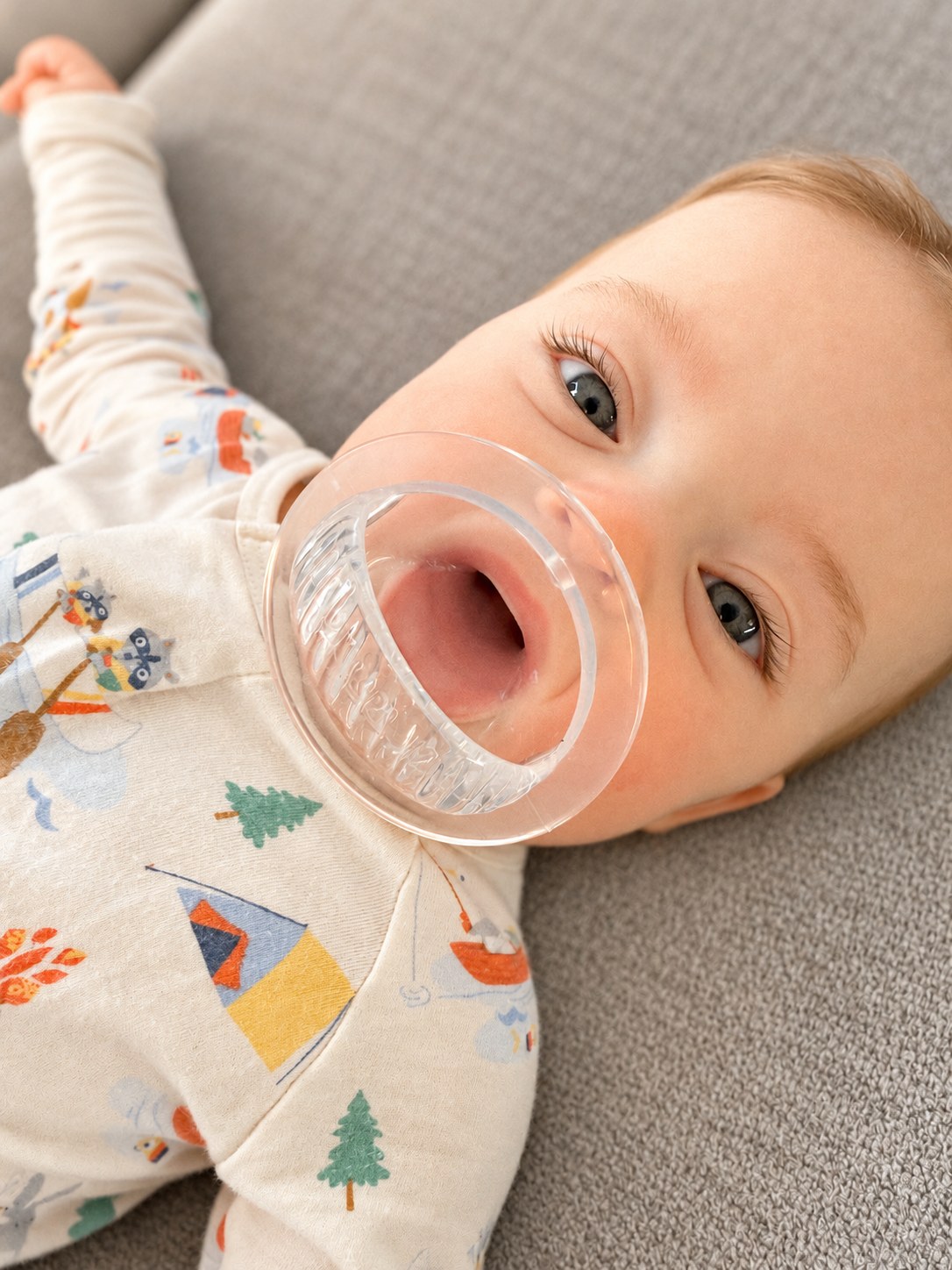
- Our pick: The Pacii. Designed by a midwife for babies who spit out every other pacifier. It’s 100% food-grade silicone with a wider, softer latch shaped more like mom than a typical pacifier, which the brand says helps with pacifier rejection and nipple confusion. It’s our go-to for picky breastfed babies.
- The hospital classic: Philips Avent Soothie. The one-piece pacifier many babies meet in the hospital. Simple, easy to clean and cheap to replace.
- Best orthodontic shape: Chicco PhysioForma Soft. One-piece silicone with an orthodontic nipple and a big, easy-to-grab loop. BabyGearLab named it best with orthodontic considerations.
- For bottle-fed babies: Dr. Brown’s HappyPaci. One-piece silicone with a nipple shaped like Dr. Brown’s bottle nipple, so it feels familiar. BabyGearLab’s best budget pick. The nipple is on the longer side, so it suits older babies best.
- Best for nights: MAM Air Night. BabyGearLab’s overall winner: a symmetrical orthodontic nipple, a big airflow shield and a glow-in-the-dark button you can find at 3 a.m. It’s multi-piece, so check it often.
A note on “orthodontic” labels: there isn’t strong evidence that one nipple shape protects teeth better than another. What matters most for teeth is how long and how hard your child sucks, so the best pacifier is the one your baby will actually take, used for sleep and soothing, and weaned on time.
Stage 2: Mouthing and teething (3 months and up)
Mouthing isn’t just teething. Chewing on safe textures helps babies map their mouths, which they’ll need for eating and talking. Look for solid silicone (not liquid-filled) and shapes that reach the back gums.
- ezpz Oral Development Tools (3 months+). A set of three silicone tools (a loop, a smile and a stick) for practicing munching, biting and chewing. ezpz works with a speech-language pathologist and feeding specialist, and these are the closest thing to feeding-therapy tools you can buy at Target.
- Our penguin silicone teether. A loop handle little hands can hold, and a nubby face that reaches sore gums.
- A fresh-food feeder like the Moss & Fawn Forage Feeder, filled with frozen breast milk or (once solids start) frozen fruit. Cold relief plus new tastes and textures.
- ezpz Tiny Pops (4 months+). Little popsicle molds for frozen breast milk, formula or smoothies. A teether and a treat.


Stage 3: First spoons and utensils (around 6 months)
- NumNum GOOtensils. Flat, textured heads that hold puree without scooping, so babies can feed themselves from day one. Brilliant for hand-to-mouth practice.
- ezpz Tiny Spoons. Soft silicone spoons sized for baby-led dipping and scooping.
- A suction bowl or plate like the ezpz Tiny Bowl or the Lalo suction plate, so the food stays put while they learn.

Stage 4: Open cups and straws (6 months and up)
Feeding specialists love open cups and straw cups because they ask the lips and tongue to work in more mature ways than a bottle or a spill-proof valve cup does.
- ezpz Tiny Cup. A tiny silicone open cup with a weighted base. Start with a sip or two of water at meals and expect some spills.
- A simple straw cup with a soft straw and no valve. Squeezable “teaching” straw cups help babies get the hang of it.

First Straw · 6 Months+
Dr. Brown’s Milestones Baby’s First Straw Cup
A soft, weighted silicone straw follows the liquid, so baby can sip from any angle while learning. Removable side handles come off as grip improves, and a sliding lid tucks the straw away for spill-free travel. Holds 9 oz.

From Bottle to Straw
Dr. Brown’s Milestones Sippy Straw Bottle
A weighted soft-silicone straw and easy-grip silicone handles turn a familiar bottle shape into straw practice. The straw cap and handles also fit Dr. Brown’s Options+ 8 oz narrow bottles. 8 oz, BPA-free and top-rack dishwasher safe.

Big-Kid Straw Cup · Ages 3+
Re-Play Insulated Straw Cup
The next step once straw drinking is second nature: an insulated stainless steel cup with a built-in straw and a sturdy handle, so cold drinks stay cold. A Target exclusive from Re-Play, the brand known for recycled materials. The packaging rates it for ages 3 and up.
Stage 5: First toothbrushes (before the first tooth)
The AAP says to wipe gums with a clean, damp cloth after feeds, then start brushing twice a day with a rice-grain smear of fluoride toothpaste as soon as the first tooth shows up. First dentist visit: by the first birthday.
- Baby Banana Toothbrush. The cult favorite. A flexible silicone brush with a banana-peel handle that doubles as a teether, so babies brush themselves (sort of) and love it.
- Frida Baby Finger Toothbrush. A soft silicone brush that slips over your finger for gum massage and first-tooth cleaning.
- Dr. Brown’s Infant-to-Toddler Toothbrush. Super-soft bristles and a tongue cleaner on the back, for when there’s a mouthful of teeth to keep clean.
When to ask for help
Talk to your pediatrician, a lactation consultant or a feeding specialist (often a speech-language pathologist or occupational therapist) if your baby struggles to latch or sucks weakly, coughs or chokes a lot during feeds, gags on every new texture well past the first weeks of solids, or isn’t gaining weight. Feeding therapy is common and it works, and the earlier you ask, the easier it is.
Keep reading: the teething survival kit · starting solids must haves · baby and toddler snack boards
Sources: American Academy of Pediatrics, HealthyChildren.org: Pacifiers and Thumb Sucking; Baby-Friendly USA on AAP pacifier guidance; BabyGearLab pacifier testing; ezpz collections by age; The Pacii; first toothbrush reviews; AAP tooth care guidance (January 2023).


Leave a Reply