Some links in this post are affiliate links. If you buy through them, I may earn a commission at no extra cost to you. As an Amazon Associate I earn from qualifying purchases. This post is general information, not medical or nutrition advice. Talk to your provider or an IBCLC about milk supply, and to your pediatrician about your baby’s diet and allergens.
Oats have a reputation in every nursing group chat: eat a bowl of oatmeal, make more milk. The truth is less magical and more useful. Oats are one of the best foods a breastfeeding mom can keep in the pantry, and the same bag can feed your baby once solids start. Here’s what oats really do, a freezer-friendly recipe that works for both of you, and the easiest ways to add protein to baby food.

Do oats really boost milk supply?
Honestly, the evidence is mostly anecdotal. Oats show up on nearly every “milk-boosting foods” list, but there are no good clinical trials showing that oatmeal increases milk volume. A 2020 Cochrane review of 41 trials found only low-certainty evidence that any galactagogue, natural or prescription, increases supply. The Academy of Breastfeeding Medicine’s protocol on galactagogues makes the same point: when supply is low, start by looking at how often and how well milk is being removed, not at the pantry.
So why do so many moms swear by oats? Probably because a warm, filling breakfast is exactly what a tired, hungry nursing body needs. Breastfeeding takes roughly 330 to 400 extra calories a day, according to the CDC, and oats deliver fiber, some protein and a bit of iron in a food you can eat one-handed. That’s reason enough to keep them around.
What actually drives supply
- Frequent, thorough milk removal. Nursing or pumping at least 8 times in 24 hours, especially in the early weeks. Milk is made on demand.
- A good latch or a well-fitted pump. Flange size and pump parts matter more than any cookie.
- Enough food and fluids. Don’t skip meals, and drink to thirst.
- Help when something feels off. An IBCLC can check latch, weight gain and your pumping plan, and many insurance plans cover visits.
Ground flaxseed and brewer’s yeast are the other two classic “lactation” add-ins, and they’re in most lactation cookie recipes. Like oats, they’re traditional rather than proven. Flax adds fiber and plant omega-3s; brewer’s yeast adds B vitamins and a noticeably bitter, savory taste. If you take medication or have a health condition, check with your provider before adding brewer’s yeast regularly.
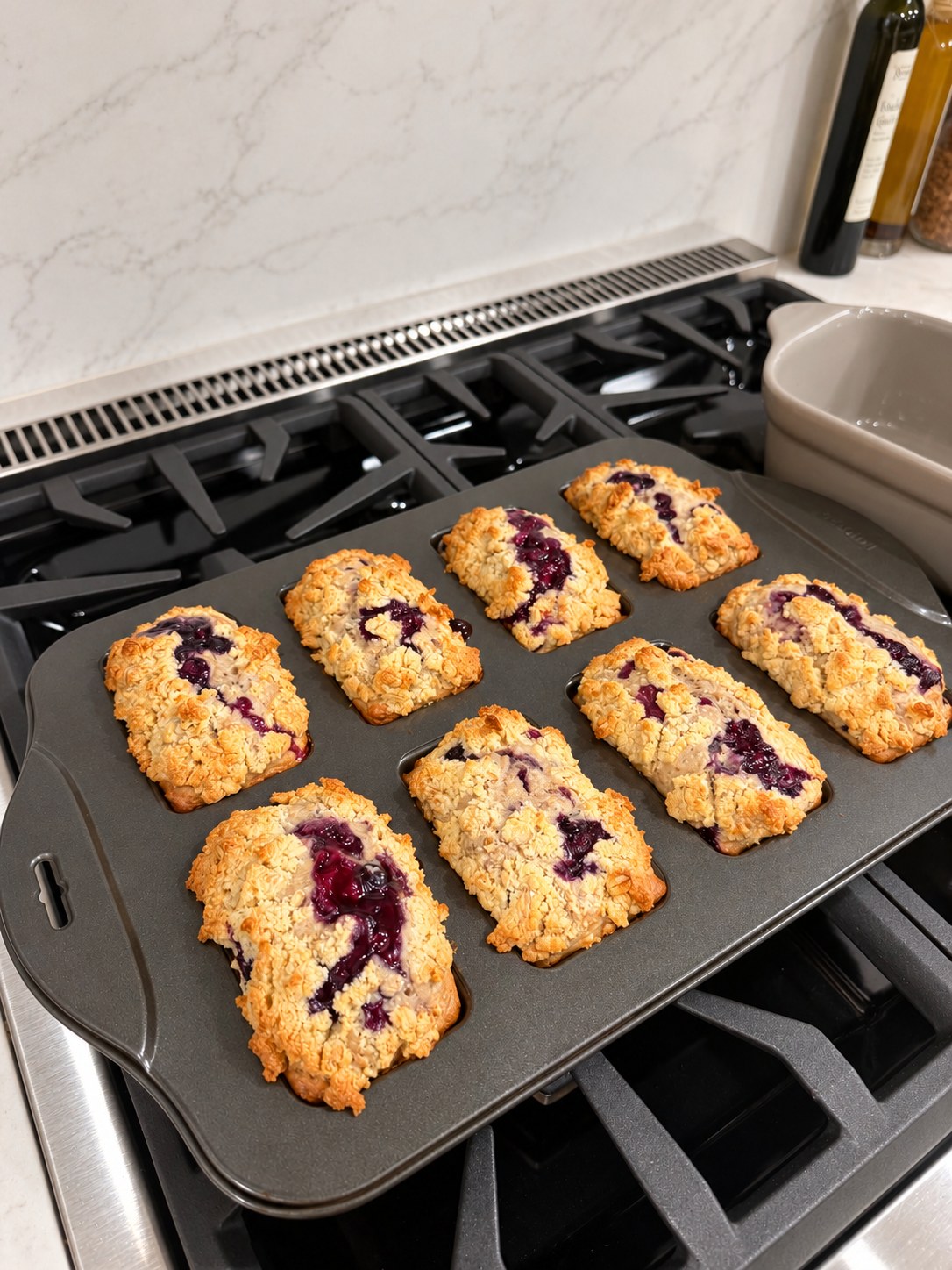
The recipe: Blueberry Oat Mini Loaves
Soft, banana-sweetened oat loaves with a jammy blueberry swirl and a crunchy oat crumble on top. It’s one bowl (plus a blender for the oats), it freezes beautifully, and a mini loaf is the right size to eat with one hand during a feed. Leave out the maple and salt and the same batter becomes a finger food for baby.

Makes: 8 mini loaves (or 12 muffins) · Prep: 15 minutes · Bake: 22 to 28 minutes at 350°F · Pan: a standard 8-cavity mini loaf pan
Ingredients
For the loaves
- 2 cups old-fashioned rolled oats, blended into flour (about 1¾ cups oat flour)
- 1 cup whole wheat pastry flour or all-purpose flour
- 1½ teaspoons baking powder
- ½ teaspoon baking soda
- 1 teaspoon ground cinnamon
- ¼ teaspoon fine salt
- 2 very ripe bananas (about ¾ cup mashed)
- 2 large eggs
- ¾ cup plain whole-milk Greek yogurt
- ⅓ cup pure maple syrup
- ¼ cup melted unsalted butter or avocado oil
- 1 teaspoon vanilla extract
- 1 cup blueberries, fresh or frozen (don’t thaw)
For the jammy swirl
- ½ cup blueberries
- 1 teaspoon lemon juice
For the oat crumble
- ⅓ cup rolled oats
- 2 tablespoons flour (any kind)
- 1½ tablespoons melted butter
- 1 tablespoon maple syrup or brown sugar
- A pinch of cinnamon
Method
- Prep. Heat the oven to 350°F. Grease the mini loaf pan or line each cavity with a parchment sling. Blend the 2 cups of oats into a fine flour.
- Make the swirl. In a small microwave-safe bowl, mash ½ cup blueberries with the lemon juice. Microwave 60 to 90 seconds, stir, and let it cool while you mix. It thickens as it sits.
- Make the crumble. In a second small bowl, rub the crumble ingredients together with your fingers until clumpy.
- Mix the wet. In a large bowl, mash the bananas until almost smooth. Whisk in the eggs, yogurt, maple syrup, melted butter and vanilla.
- Add the dry. Add the oat flour, flour, baking powder, baking soda, cinnamon and salt right on top. Stir just until no dry streaks remain, then fold in 1 cup blueberries. Let the batter rest 5 minutes so the oats can absorb some liquid.
- Fill and swirl. Divide the batter among the 8 cavities, about ¾ full. Spoon a little blueberry jam over each and drag a butter knife through it in a loose S. Scatter the crumble on top.
- Bake. Bake 22 to 28 minutes, until the tops spring back and a toothpick in the center comes out clean (a streak of jam is fine). Cool 10 minutes in the pan, then lift out onto a rack.
Other pans
- Muffin tin: 12 standard lined cups, 350°F for 20 to 24 minutes.
- Mini muffins (best for babies): about 36, 350°F for 12 to 15 minutes.
- One 9×5 loaf: 350°F for 50 to 60 minutes. Tent loosely with foil if the top browns before the center is set.
Storage and freezing
Cool completely before storing, or condensation turns the tops soggy. Keep them airtight at room temperature for up to 2 days or in the fridge for up to 5. To freeze, wrap each mini loaf individually and store in a freezer bag for up to 3 months. Thaw overnight on the counter, or microwave a frozen loaf for 30 to 45 seconds. A stash in the freezer before baby arrives is a gift to your future self.
Two variations
Optional lactation add-ins. Whisk 2 tablespoons ground flaxseed and up to 1 tablespoon brewer’s yeast into the dry ingredients. They won’t change the bake. Think of them as a nutritional extra, not a supply fix: the evidence that they increase milk is limited. Brewer’s yeast is bitter, so start small.
Baby-friendly version (6 months+). Leave out the maple syrup and the salt, and add ¼ cup unsweetened applesauce to make up the liquid. Skip the crumble, or make it with just oats and butter. No honey before 12 months, in the batter or on top. For new eaters around 6 to 9 months, cut a mini loaf into finger-length strips about as wide as two adult fingers. Once the pincer grasp shows up, offer small, soft pieces. Baked blueberries turn soft, but flatten any whole ones that stay firm. The batter contains egg, dairy and wheat, so serve it after each has been introduced on its own.
More oat ideas for nursing moms
- Overnight oats. Stir ½ cup rolled oats with ½ cup milk, ¼ cup Greek yogurt and a spoon of chia in a jar. By the 6 a.m. feed, breakfast is ready.
- Baked oat cups. Mix oats, egg, milk, mashed banana and fruit, bake in a muffin tin at 350°F until set, and freeze. Reheat two at a time.
- Oat energy bites. Oats, nut butter, ground flax, a little honey and dark chocolate chips, rolled and chilled. Our version is in the postpartum nutrition recipes. (They have honey, so they’re for you, not baby.)
- Savory oats. Cook oats in broth, then top with a soft egg, spinach, parmesan and chili crisp. Think of it as a 5-minute risotto.
- Oat smoothie. Blend ¼ cup rolled oats with frozen berries, banana, yogurt and milk for a drink that actually keeps you full.
- Homemade oat milk. An Almond Cow turns oats, nuts or seeds into fresh plant milk in about a minute, ready for your overnight oats, smoothies or coffee.
Oats work for baby too. Oat cereal or finely ground oats make a good swap for rice cereal, which tends to carry more arsenic. More on that in heavy metals in baby food.
Baby food protein hacks
Fruit and vegetable purees are easy, but they’re light on protein and iron. These add-ins stir straight into purees, oatmeal or mashed fruit. All are for babies 6 months and up who have started solids, unless noted.
- Blended cottage cheese. Blend until silky, then stir a spoonful into fruit puree or oatmeal. Cottage cheese is relatively high in sodium, so choose a low-sodium or no-salt-added tub and keep portions small before 12 months. Rinsing regular cottage cheese in a fine-mesh strainer also cuts sodium.
- Plain whole-milk Greek yogurt. Thick, tangy and protein-rich. Swirl it into fruit puree or serve it in a suction bowl like the ezpz Tiny Bowl. Skip flavored cups, which usually have added sugar.
- Eggs, well cooked. Mash a hard-cooked egg into avocado or sweet potato, or serve soft scrambled egg. Egg is a common allergen worth introducing early, and it should always be fully cooked.
- Smooth nut or seed butter, thinned. Stir a teaspoon of smooth peanut, almond or sunflower seed butter into warm oatmeal, or thin it with water, breast milk or puree. AAP and NIAID guidance supports introducing peanut early and keeping it in the rotation. Never offer whole nuts or a thick glob of nut butter, both of which are choking hazards.
- Hemp hearts, ground chia or ground flax. Sprinkle about a teaspoon into wet food like oatmeal, yogurt or puree. Use chia and flax ground (or chia fully soaked), never as dry whole seeds.
- Lentils, beans and tofu. Mash cooked lentils or beans into vegetable purees (rinse canned beans or buy no-salt-added). Mash soft tofu into fruit, or offer strips of firm tofu as a finger food.
- Breast milk or formula instead of water. Use it to thin purees and oatmeal. It adds nutrition and a familiar taste.
- The milk rule. Whole cow’s milk as a drink waits until 12 months. Before then, it’s fine baked into foods or cooked into oatmeal.
Before you introduce allergens
Peanut, egg, dairy, tree nuts, wheat, soy, sesame and fish are best introduced one at a time, in a small amount, at home, early in the day so you can watch for a reaction. Talk to your pediatrician first, especially if your baby has eczema or a known food allergy. Babies with severe eczema or an egg allergy may need an allergist’s evaluation before peanut is introduced.
Looking for the gear side of starting solids? Our starting solids must haves cover the high chair and first foods, and the baby and toddler snack board ideas turn these proteins into a plate.
Quick answers
Will eating oatmeal increase my milk supply?
Maybe not directly. The evidence is mostly anecdotal. Oats are a nourishing, easy food that helps you eat enough, which supports breastfeeding, but frequent nursing or pumping is what tells your body to make more milk. If you’re worried about supply, see an IBCLC.
Can my baby eat these mini loaves?
Yes, once they’re eating solids, if you make the baby-friendly version: no maple syrup, no salt and no honey. Serve finger-length strips at first, then small soft pieces, and make sure egg, dairy and wheat have each been introduced first.
Can I use quick oats or make these gluten-free?
Quick oats blend into flour just as well as rolled oats. Steel-cut oats won’t work. For gluten-free loaves, use certified gluten-free oats and swap the wheat flour for more oat flour or a 1:1 gluten-free blend. Expect a denser, more tender crumb.
Is cottage cheese safe for babies?
Generally yes, from around 6 months, once your baby has started solids. Because it’s on the salty side, pick a low-sodium or no-salt-added version, blend or flatten the curds, and keep portions small in the first year.
Keep reading: starting solids must haves · baby and toddler snack board ideas · healthy smash cake recipes for the first birthday · wearable breast pumps · postpartum nutrition
Sources: Cochrane: Oral galactagogues for increasing breast milk production (2020); ABM Clinical Protocol #9: Use of Galactogogues (2018); McBride et al., use of galactagogues among Australian women (PLoS ONE, 2021); Cincinnati Children’s: Increasing breast milk supply; CDC: Maternal diet and breastfeeding; CDC: Foods and drinks to avoid or limit; AAP (HealthyChildren.org): Early introduction of peanut-based foods; NIAID addendum guidelines for the prevention of peanut allergy; Solid Starts: Cottage cheese. Recipe inspiration: Laura Fuentes, blueberry oat breakfast bread; Healthy Little Foodies, baby blueberry muffins; The View From Great Island, mini loaf pan baking times.


Leave a Reply