Some links in this post are affiliate or referral links. If you buy through them, I may earn a commission or credit at no extra cost to you. As an Amazon Associate I earn from qualifying purchases. Links to other creators’ recipes are not sponsored. This post is general information, not medical or nutrition advice. Ask your provider about supplements and your own needs.
The fourth trimester asks a lot of your body. You’re healing from birth, rebuilding the stores pregnancy drew down and, if you’re breastfeeding, making milk around the clock. So eat for both jobs: recovery and feeding. Not perfectly and not on a plan, but often, warmly and with enough protein to matter. Here are the nutrients worth paying attention to, the foods that make them easy, recipes from the creators we keep coming back to, and the books that treat postpartum nourishment as seriously as it deserves.

The nutrients that matter most
You don’t need to track any of this. Think of it as a shopping list for your head. And keep taking the prenatal or postnatal vitamin your provider recommends. Ask whether you still need everything in a prenatal: the Dietary Guidelines note that a prenatal can supply more folic acid and iron than you need once baby is here.
- Iron. Pregnancy draws iron down, and blood loss at delivery can leave you depleted, which shows up as exhaustion, dizziness or breathlessness. The daily target while breastfeeding is actually modest (9 mg, per NIH), but if you were anemic at the end of pregnancy or lost a lot of blood, ask your provider about a blood test and a supplement. Food sources: red meat, poultry, seafood, lentils, beans, spinach and fortified cereals. Pair plant sources with vitamin C, like citrus, strawberries, bell peppers or tomatoes, to absorb more.
- Protein. Healing tissue and making milk both run on it, and needs rise to roughly 71 grams a day while breastfeeding. In practice: some at every meal and snack. Eggs, Greek yogurt, cottage cheese, chicken, fish, tofu, beans and lentils.
- Omega-3 DHA. A fat that passes into breast milk and supports your baby’s developing brain and eyes. The best source is low-mercury fish: the FDA and EPA advise 8 to 12 ounces (2 to 3 servings) a week from their “Best Choices” list, such as salmon, sardines, shrimp, cod and canned light tuna. Don’t eat fish? Ask about an algae-based DHA supplement. Chia, flax and walnuts provide ALA, a plant omega-3 the body converts to DHA only in small amounts.
- Choline. The quiet one. Needs rise to 550 mg a day while breastfeeding, and many prenatal vitamins contain little or none, so check your label. One large egg has about 150 mg, and meat, fish, dairy, beans and broccoli add more.
- Iodine. Breastfeeding needs jump to 290 mcg a day, and only about half of the prenatal vitamins sold in the U.S. contain iodine. Sources: iodized salt (most sea salts and processed foods aren’t iodized), dairy, eggs and seafood. The American Thyroid Association recommends that breastfeeding women take a daily supplement with 150 mcg of iodine, so it’s worth asking your provider.
- Vitamin D. Breast milk is naturally low in vitamin D, which is why pediatricians usually recommend vitamin D drops for breastfed babies. For you: fatty fish, fortified milk, egg yolks and a supplement if your provider suggests one.
- Vitamin B12. Found almost only in animal foods. If you’re vegan or eat very little meat, eggs or dairy, talk to your provider about a B12 supplement while breastfeeding. According to the CDC, babies of mothers who eat no animal products can get too little B12 through milk.
- Calcium. Needs stay at about 1,000 mg a day while breastfeeding. Your body borrows some calcium from bone while you nurse and generally restores it after weaning. Dairy, fortified plant milks, calcium-set tofu, canned salmon with bones and leafy greens all count.
- Fiber and fluids. Postpartum constipation is common, and iron pills and pain medication can make it worse. Oats, chia, lentils, fruit and vegetables help, along with a full water bottle wherever you feed. Drink to thirst. There’s no magic number.
- Enough calories. Breastfeeding takes an extra 330 to 400 calories a day, according to the CDC, roughly one generous snack. This isn’t the season to restrict. Eating enough supports healing, energy and milk.
The short version
Protein at every meal, fish twice a week, eggs often, iodized salt in the kitchen, a water bottle at every feeding spot and the vitamin your provider recommends. That covers most of it.
Foods to build meals around
Stock these and most meals assemble themselves.
- Lentils and beans. Iron, protein and fiber in one inexpensive pantry staple. Red lentils cook in about 20 minutes and melt into soups.
- Oats. Fiber, some protein and a little iron, plus the most famous “milk-boosting” reputation in the pantry. The honest version: the effect on supply is mostly anecdotal, and the same goes for flaxseed and brewer’s yeast. Oats help you eat enough, which does matter. Cook them, bake with them, or make your own oat milk with an Almond Cow, which turns oats, nuts or seeds into fresh plant milk in about a minute. More in our guide to oats for breastfeeding moms.
- Eggs. Choline, protein and vitamin D in the yolk. Hard-boil a dozen at a time.
- Salmon and sardines. DHA, protein and vitamin D. Canned counts, and the soft bones add calcium.
- Bone broth and soups. Warm, brothy meals sit at the heart of postpartum traditions around the world, from the Chinese practice of zuo yuezi to la cuarentena in Latin America. That’s tradition. The specific healing claims made for bone broth haven’t been well studied. What holds up is simpler: a warm, protein-rich soup is easy to eat, easy to digest and hydrating.
- Leafy greens. Folate, calcium and some iron. Stir a handful of spinach into anything hot.
- Sweet potatoes. Fiber, vitamin A and comfort. Roast a full tray at once.
- Avocado. Healthy fats, fiber and potassium, with no cooking required.
- Nuts, seeds and nut butters. Fat, protein and magnesium. The original one-handed snack.
- Chia seeds. Fiber and plant omega-3s (ALA), and the base of the easiest make-ahead breakfast there is.
- Greek yogurt and cottage cheese. Protein and calcium by the spoonful.
- Dates and dried fruit. Quick energy and fiber, and raisins and apricots add a little iron. Even better with nut butter.
- Water and electrolytes. Plain water does most of the work. An electrolyte mix can help on hot days or during the heavy night sweats of the first weeks.
One-handed, no-cook snacks
Keep a basket and a water bottle wherever you feed: energy bites, hard-boiled eggs, cheese sticks with crackers, Greek yogurt cups, trail mix, a banana with a nut butter pouch, and a jar of overnight oats or chia pudding. For the bathroom side of recovery, see our postpartum bathroom caddy.
5 easy postpartum recipes
1. Iron-boosting smoothie
Blend a handful of spinach, 1 banana, ½ cup orange juice, 1 cup almond milk, and 1 tbsp chia seeds. The vitamin C in the orange juice helps you absorb the iron in the spinach.
2. Nursing mama oatmeal
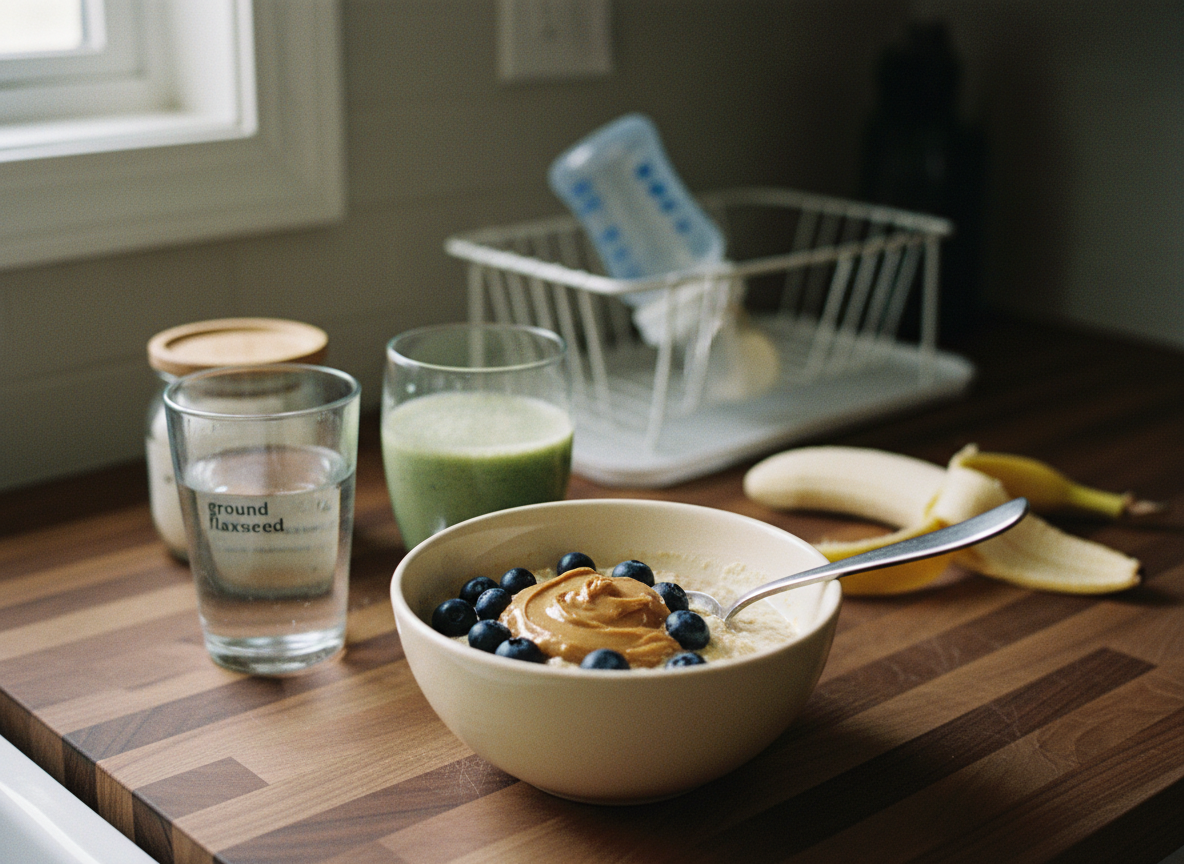
Cook ½ cup rolled oats in 1 cup milk of choice. Stir in 1 tbsp ground flaxseed and 1 tbsp peanut butter, then top with blueberries.
3. Simple salmon salad
Toss a cooked salmon fillet with 2 cups mixed greens, ½ avocado, and a boiled egg. Dress with olive oil and lemon.
4. One-pan chicken and veggies
Spread 2 chicken breasts, 2 cups broccoli, and 1 cup cubed sweet potato on a sheet pan. Drizzle with olive oil, season with salt, pepper, and garlic powder, and roast at 400°F for 25 to 30 minutes, until the chicken reaches 165°F.
5. Lactation energy bites
Mix 1 cup oats, ½ cup peanut butter, 1 tbsp brewer’s yeast, 2 tbsp honey, and ¼ cup dark chocolate chips. Roll into balls and refrigerate. Perfect one-handed snack for night feeds.
Recipes from moms (and cooks) we love
Three creators whose recipes we keep coming back to: simple, nourishing and good enough to make twice. Two of them are moms who have fed themselves through the newborn stage, and all three write for people with very little free time. The links go to their sites, where you’ll find the full recipes and their photos. None of these are sponsored.
Minimalist Baker
Co-founded by creative director Dana Shultz, Minimalist Baker built its following on a simple promise: recipes that take 10 ingredients or less, one bowl or 30 minutes or less. Most are plant-based, many are gluten-free, and plenty freeze well, which makes it a quiet gold mine for postpartum prep.
- How to Make Chia Pudding. Four ingredients stirred together and left to set in the fridge. It keeps for days, so one batch covers most of a week of breakfasts. Spoon it over Greek yogurt for extra protein.
- Nourishing Cabbage, Fennel & Lentil Soup. A one-pot soup of lentils, greens and potatoes that freezes for up to a month.
- No-Bake PB & J Energy Bites. Oats, nut butter, chia and flax rolled into a freezer-friendly snack that tastes like a PB&J.
Olivia Adriance
Olivia Adriance is an Austin-based recipe creator, a former Division I runner and ex-consultant who went full time in 2022 and has since become a mom to a daughter. Her cooking is whole-food, protein-forward and unfussy, and she writes candidly about new motherhood. Her cookbook is Glow-Getter.
- Lactation Bites. No-bake peanut butter oat bites with flax, chia and brewer’s yeast. She writes that she makes a batch nearly every week as a new mom. Enjoy them as a nourishing snack rather than a proven supply fix.
- Chicken Lentil Stew with Spinach and Lemon. Rotisserie chicken and lentils in one pot, so protein, iron and fiber come in a single bowl. It freezes for up to three months in single portions.
- Veggie Egg Breakfast Muffins with Sweet Potato Crust. Make a dozen, freeze them and reheat for a choline-rich breakfast in under a minute.
Kale Junkie
Kale Junkie is Nicole Keshishian Modic, a Los Angeles-born former lawyer turned recipe developer, author of the cookbook Love to Eat and, in her own words, a “boy mama.” Her recipes are fast, generous and comforting: the kind of food you want on a hard day.
- Ginger Turmeric & Lemon Chicken Soup. A bone-broth chicken soup brightened with ginger, turmeric, greens and lemon. Freeze the base without the pasta and spinach, then add them fresh when you reheat.
- One Pot Curry Lentil Soup. Red lentils, tomatoes and coconut milk in about 30 minutes. Vegan and freezer-friendly.
- Single-Serving Carrot Cake Baked Oats. A hearty, dessert-for-breakfast bowl of oats and carrots for the mornings that call for something that feels like a treat.
Books worth reading
A short shelf for the last weeks of pregnancy, or for the friend who’s about to have a baby. Start with the first one.
The Postpartum Classic
The First Forty Days by Heng Ou
Written with Amely Greeven and Marisa Belger and rooted in the Chinese tradition of zuo yuezi, or “sitting the month.” Part cookbook, part philosophy: warming soups, congees and teas, and a gentle case for resting and letting yourself be cared for.
Best Nutrition Reference
Real Food for Pregnancy by Lily Nichols
Primarily a pregnancy book, from a registered dietitian. Its research-heavy take on nutrient-dense eating, with guidance on the fourth trimester, makes it a strong reference for the months after, too.
Best for Whole-Body Recovery
The Fourth Trimester by Kimberly Ann Johnson
A postpartum guide to healing your body, balancing your emotions and restoring your vitality, from a doula and bodywork practitioner. Food is one part of a bigger picture of rest, support and physical recovery.
Read With an Open Mind
The Postnatal Depletion Cure by Dr. Oscar Serrallach
An Australian family doctor’s argument that pregnancy and early motherhood can leave mothers depleted for years, with a plan to replenish. “Postnatal depletion” isn’t a recognized medical diagnosis, so treat it as one doctor’s perspective and run any supplements past your own provider.
For Lactation Foods
Mother Food by Hilary Jacobson
A deep dive into traditional milk-boosting foods and herbs from around the world. Thorough and interesting, but the evidence behind most galactagogues is mixed at best, and some herbs aren’t right for everyone. Check with an IBCLC or your provider before using herbs for supply.
Make it easier on yourself
Freezer prep before baby
A few afternoons of batch cooking in the third trimester buys you weeks of real food later.
- Soups and stews in single portions. Lentil soups, chicken soups and the stews above. Freeze them flat in bags so they thaw fast.
- Egg muffins or breakfast burritos, wrapped one by one for grab-and-go protein.
- Energy bites by the dozen. They thaw in minutes.
- Smoothie packs. Fruit, greens, chia and oats portioned into bags, so you just add liquid and blend.
- Oat loaves or muffins, like our blueberry oat mini loaves.
The full plan, with storage tips and tools, is in our best freezer meals for new moms.
Let someone else cook. Meal delivery like CookUnity (50% off your first week through our link) takes dinner off your plate.
Quick answers
Do I need to eat more while breastfeeding?
A bit. The CDC estimates that well-nourished breastfeeding moms need about 330 to 400 extra calories a day, though it varies with your body, your activity and whether you exclusively breastfeed. Eat to hunger, and don’t skip meals.
Is coffee OK while breastfeeding?
Generally, yes, in moderation. The CDC and the Dietary Guidelines say up to about 300 mg of caffeine a day, roughly 2 to 3 cups of coffee, usually doesn’t affect babies. Newborns and preemies clear caffeine slowly, so if your baby seems unusually fussy or wakeful, cut back.
Is fish safe while breastfeeding?
Yes, and it’s encouraged. Choose from the FDA and EPA “Best Choices” list, like salmon, sardines, shrimp, cod and canned light tuna, and aim for 2 to 3 servings a week. Skip the high-mercury fish on their “Choices to Avoid” list, such as shark, swordfish, king mackerel and bigeye tuna.
Should I diet postpartum?
Not in the early months. Your body is healing and, if you’re breastfeeding, feeding someone else. Focus on regular, nourishing meals and let your body change gradually. Cutting back hard can drain your energy and mood, and it may affect supply, so talk to your provider or a registered dietitian before making changes.
Keep reading: oats for breastfeeding moms · wearable breast pumps · best freezer meals for new moms · postpartum bathroom caddy · Postpartum Must Haves
Sources: CDC: Maternal diet and breastfeeding; Dietary Guidelines for Americans 2020–2025: Pregnancy and lactation; NIH Office of Dietary Supplements: Iodine; NIH ODS: Iron; NIH ODS: Choline; FDA/EPA: Advice about eating fish; LactMed: Caffeine; ACOG: Breastfeeding your baby; Cochrane: Oral galactagogues for increasing breast milk production (2020).


Leave a Reply