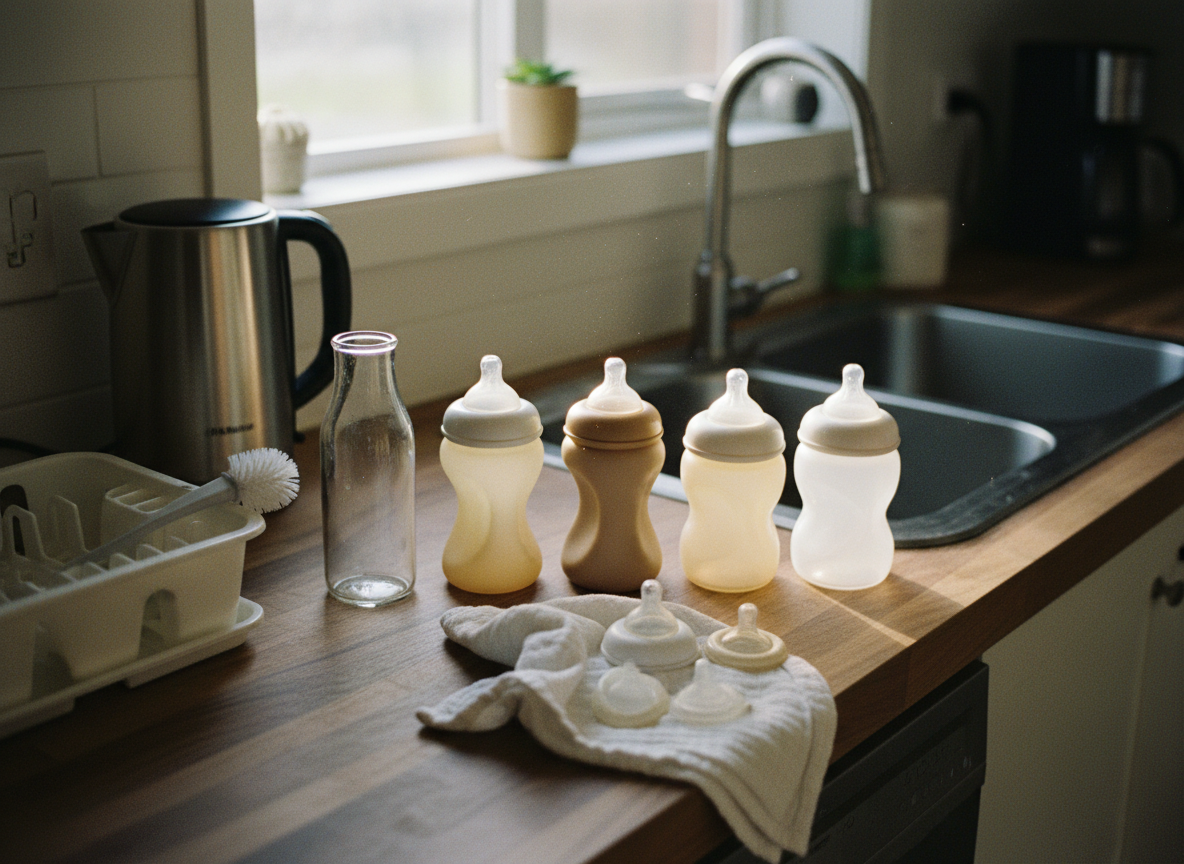
Somewhere around week four, a thought arrives: “I would like to leave the house for more than 90 minutes.” Or go back to work. Or let your partner take a night feed. Enter the bottle, and, for many breastfed babies, a standoff of epic proportions.

Here’s how to make the switch smoother, based on guidance from Texas WIC’s Breastmilk Counts.
When to offer the first bottle
If you can, breastfeed exclusively for the first 3 to 4 weeks so nursing gets well established. Then introduce a bottle at about 4 weeks, or two weeks before you go back to work, whichever comes first. Starting before 6 weeks tends to make switching between breast and bottle easier.
Paced bottle feeding, step by step
Paced feeding slows the bottle down so it works more like the breast. Baby stays in charge of how much they eat, and they’re less likely to prefer the bottle’s fast flow.
- Hold baby fairly upright.
- Touch the nipple to their lip and wait for them to open wide.
- Hold the bottle horizontal, not tipped up, so milk flows slowly. A little air in the nipple is fine.
- Every 5 to 10 seconds of sucking, lower the bottle or rest the nipple on their cheek for a short pause.
- Stop when they show they’re full: turning away, relaxed hands, slowing down. Leftover milk is fine.
A paced feed usually takes about 15 minutes. Start with less milk than you think they need. Leftover breast milk should be tossed within two hours after the feed ends.
When the baby says absolutely not
- Leave the room. Many babies won’t take a bottle from the person who smells like milk. Let your partner or a grandparent try, ideally with you out of sight.
- Don’t wait until they’re starving. A frantic, hungry baby has zero patience for new things. Try when they’re a little hungry and calm.
- Try a different bottle or nipple. A longer, thinner nipple with a wider base helps some babies latch deeply. Our four favorite bottles for breastfed babies are a good place to start.
- Keep practicing. Offer a bottle once a day or every other day so they don’t forget how.
- Warm it gently. Set the bottle in warm water, never the microwave, which creates hot spots. Or use a bottle warmer.
Protect your supply
Each time baby gets a bottle instead of the breast, pump around that time so your body keeps getting the signal. A smart trick: pump after the morning feed, when supply tends to run highest, and save that milk for your partner’s night shift. More on the gear in pumping essentials.
Keep reading: the back-to-work pumping bag · milk storage bags · bottles for breastfed babies



Leave a Reply