Some links in this post are affiliate links. If you buy through them, I may earn a commission at no extra cost to you. This post is general information, not medical advice. Talk to your pediatrician or a board-certified dermatologist about your baby’s skin.
Nobody warns you that your baby’s perfect, poreless skin can turn into a red, scratchy map overnight. Eczema is one of the most common things pediatricians see, and the good news is that a simple, boring routine does most of the work.
What baby eczema looks like
According to the American Academy of Pediatrics, baby eczema usually starts on the face and scalp: red, dry patches on the cheeks, forehead and around the mouth. It rarely shows up in the diaper area. It comes from a weaker skin barrier that lets water out and irritants in, and it often runs in families.
Food doesn’t cause eczema, but babies with eczema are more likely to have food allergies. That matters for one big reason, below.
The calm-skin routine
These steps come straight from the American Academy of Dermatology’s advice for babies:
- Short, lukewarm baths. Five to 10 minutes, not hot. Use a mild, fragrance-free cleanser only where baby is actually dirty, and skip the scrubbing.
- Pat, don’t rub, then moisturize right away. Seal in the water while skin is still damp. Thick creams and ointments beat thin lotions and oils.
- Moisturize twice a day, or as often as baby’s skin needs it, even when it looks clear.
- Protect the drool zone. For drooly cheeks and chins, a thin layer of plain petroleum jelly before feeds and naps keeps saliva off the skin. (Teething, we’re looking at you.)
- Use medicine exactly as prescribed. If your doctor prescribes a steroid cream, it goes on after the bath and before the moisturizer, in the amount they tell you. Babies are more sensitive to steroids than adults, so follow the directions closely.
Triggers to cut
The AAD’s list of common culprits: sweat, saliva, scratching, dry air, cigarette smoke, pet dander, pollen, scratchy fabrics, harsh detergents, fragranced products, baby powder and some wipes. You don’t need to change everything at once. Swap one thing at a time and watch what happens.

What’s in our cabinet

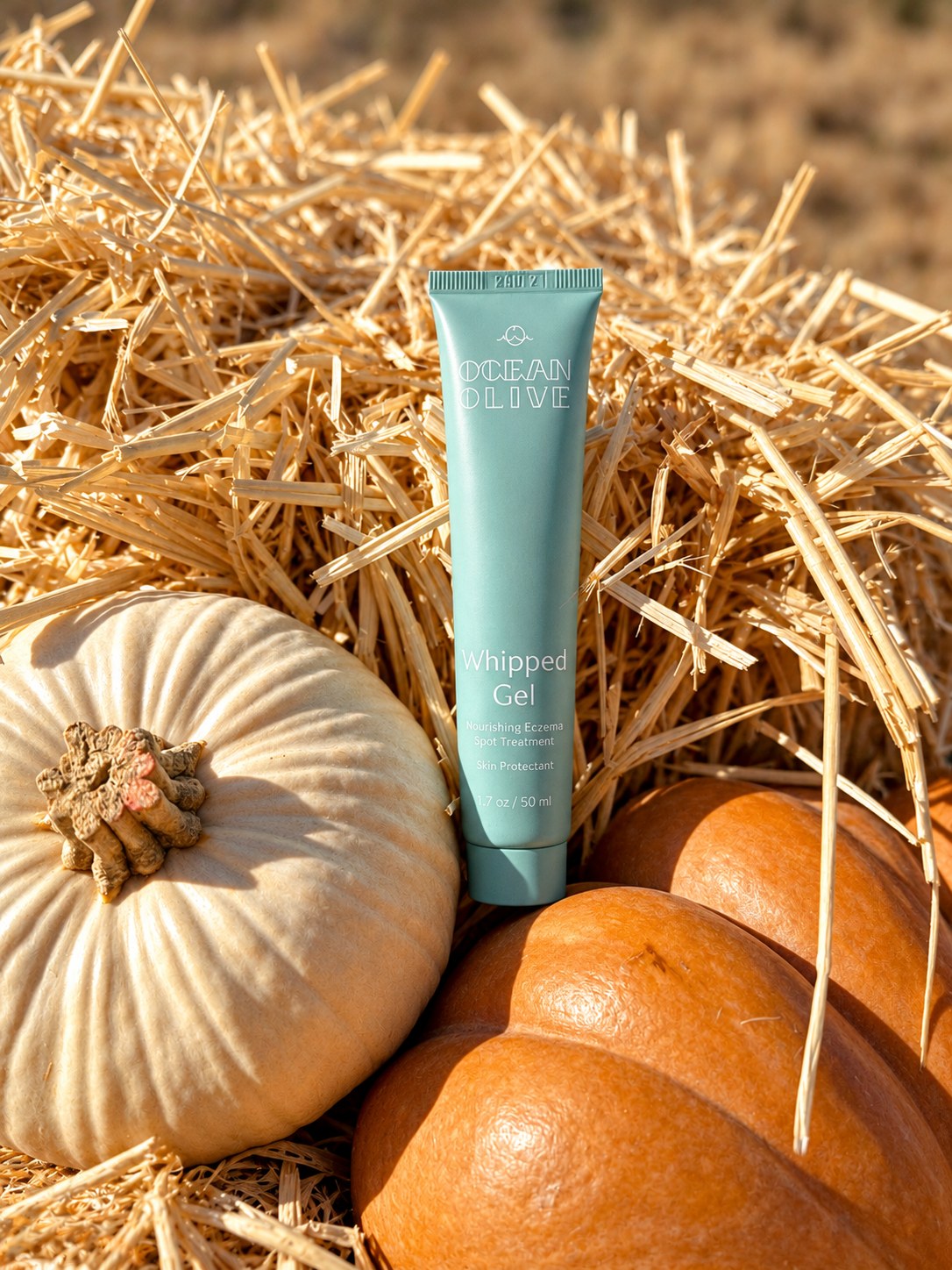
For flare-ups: Ocean Olive Whipped Gel
This is the tube we grab when a patch turns angry. It’s an over-the-counter eczema spot treatment with colloidal oatmeal as the active ingredient, labeled to temporarily protect and relieve minor itching and irritation from eczema. The base is gentle stuff: sunflower seed oil, shea butter, glycerin and allantoin, with no added fragrance in the ingredient list. It’s also listed in the National Eczema Association’s Seal of Acceptance directory, which is a good sign for sensitive skin.
One label rule to know: stop and call your doctor if the skin gets worse, or if it doesn’t clear up within 7 days.

For everyday dry skin: Bubbsi
Bubbsi was started by a mom of three who couldn’t find a natural formula that worked for her own newborn’s eczema-prone skin. Everything is built on organic coconut oil, with no parabens, phthalates, sulfates, mineral oil, dyes or essential oils. The line covers the whole bath routine: a gentle coconut oil shampoo and wash, a Whipped Coconut Oil Body Cream for daily after-bath massage, and a Coconut Oil Balm for the driest spots like cheeks, elbows and the backs of the knees.
Honest note: Bubbsi has a light, natural coconut-vanilla scent, and dermatologists generally recommend fragrance-free products for eczema. So we use Bubbsi for everyday dry skin and keep the spot treatment for active flares. Patch-test any new product on a small area first, and Bubbsi itself says its products aren’t meant to treat or cure eczema.
Reader code: use NEWMOM15 for 15% off at Bubbsi. The Newborn Starter Set (0 to 24 months) is the easiest place to start.
Eczema and peanut: the part most parents miss
Babies with eczema have a higher risk of peanut allergy, and the timing of peanut introduction matters. National Institute of Allergy and Infectious Diseases guidelines say:
- Severe eczema (or egg allergy): peanut foods as early as 4 to 6 months, but only after your pediatrician checks for allergy first.
- Mild to moderate eczema: peanut foods at home around 6 months.
- No eczema: peanut foods along with other first foods.
Bring it up at the 4-month visit. Nut puffs like Mission MightyMe make regular peanut practice easy once you have the green light. More in our snack aisle guide.
Call the doctor if you see
- Yellow or honey-colored crusts
- Weepy, oozing skin, blisters or pus bumps
- A rash that isn’t improving with your usual routine
Eczema makes skin infections more likely, and these can be signs of one.
Eczema has good weeks and bad weeks. Stick with the routine, and remember that most babies’ skin gets much calmer as they grow.
Keep reading: the teething survival kit · baby sunscreen by age · small and mom-owned brands we love · bath and baby care must haves · coupon codes
Sources: American Academy of Pediatrics, HealthyChildren.org: Eczema; American Academy of Dermatology: How to treat eczema in babies; NIAID peanut allergy prevention guidelines (American Family Physician); Ocean Olive Whipped Gel drug facts; National Eczema Association product directory; Bubbsi.


Leave a Reply